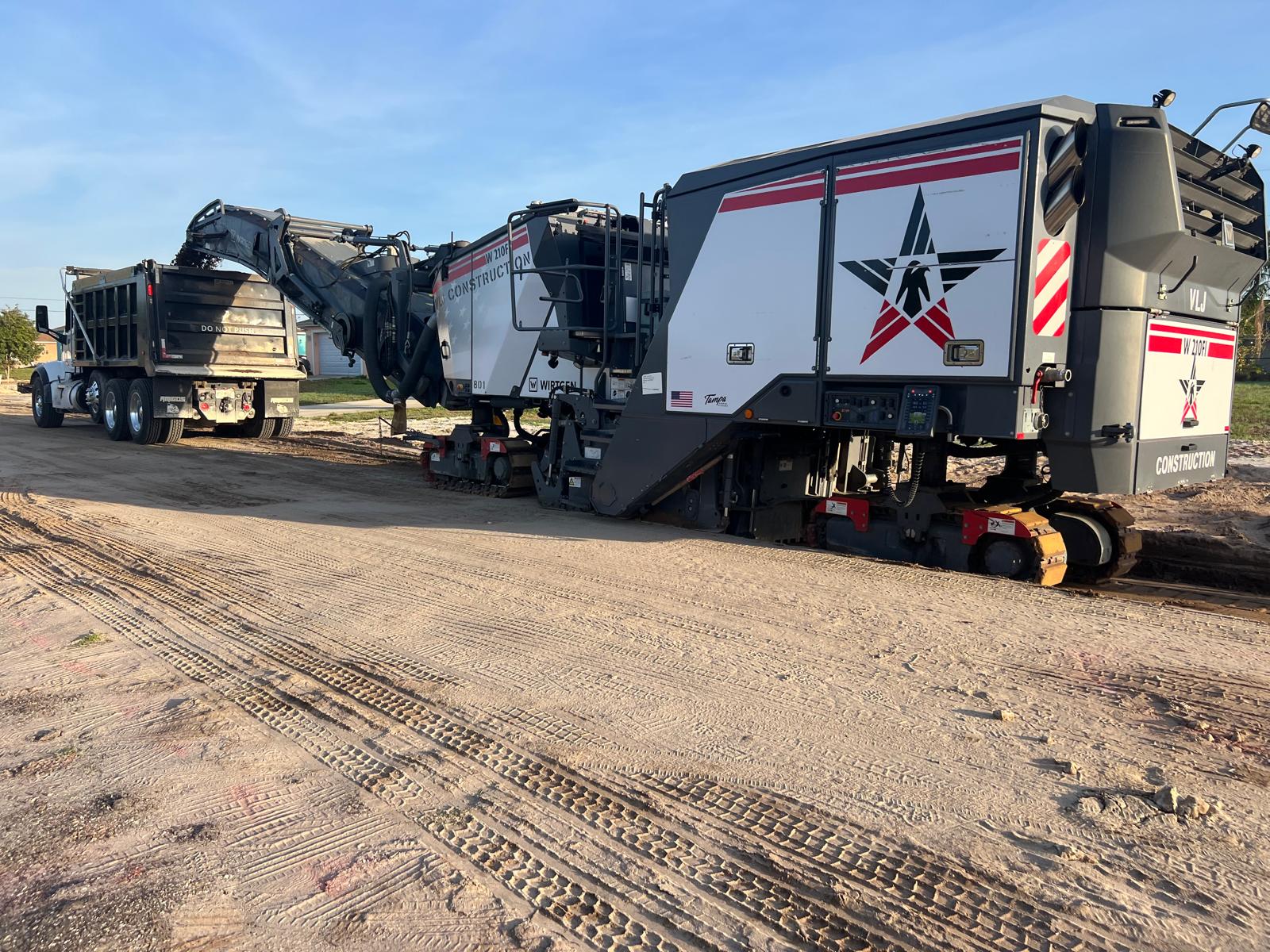
The conveyor swings out, the truck pulls forward, and a few tons of old pavement leave the site. For most people on a project, that is where the story of reclaimed asphalt pavement ends. It is worth understanding what happens next, because RAP is a material with a market, and where it goes affects both project cost and what a contractor can claim about the work.
RAP is a product, not debris
Reclaimed asphalt pavement is milled-up asphalt: aggregate and binder that were already engineered once. The binder has aged and stiffened, but the aggregate is intact and graded. That combination is valuable, which is why RAP is one of the most recycled materials in the country rather than something that goes to a landfill.
For a general contractor, the practical consequence is that millings are an asset on the balance sheet of a job, not purely a disposal line item. How much of an asset depends on quality, and quality depends on decisions made at the mill.
Clean piles are worth more than mixed piles
The single biggest factor in what a stockpile is worth is whether it is consistent. A pile of uniform millings from a single project, milled at a controlled depth from a known pavement, has a predictable gradation and binder content. A pile that mixes surface course with base material, or that has picked up soil from an unstable subgrade, is far less useful.
That is why milling depth is a materials decision as much as a grade decision. Cutting clean to a defined layer keeps the RAP homogeneous. Cutting through into the layer below, or letting the drum pick up base, contaminates the product.
A few things degrade a stockpile quickly:
- Soil and base intrusion, usually from milling too deep or working over a failed section
- Mixing sources without segregating piles by project or by pavement type
- Fines and moisture, which build up in a pile left uncovered through a wet season
- Debris — vegetation, joint sealant, pavement markings and general jobsite trash
None of these make RAP unusable. All of them narrow what it can be used for and reduce what a plant will pay for it.
Where it actually ends up
Most RAP goes back into new asphalt mixtures. Plants blend it with virgin aggregate and binder, which reduces both the raw material demand and the cost of the mix. FDOT allows RAP in its asphalt mixtures within defined limits, and the specification governs how much can be used and what the producer must demonstrate about consistency.
RAP also has a second life outside hot mix, particularly as a stabilized base or a surfacing material for yards, haul roads, staging areas and shoulders. It compacts well and it drains, which makes it useful for the kind of temporary surface a construction site needs and nobody wants to pay new aggregate prices for.
Why hauling determines the economics
RAP is heavy and low in value per ton, which means transport distance dominates the economics. Millings that travel a short distance to a nearby plant or stockpile are worth having. Millings that travel across several counties can cost more to move than the material returns.
This is where hauling capacity stops being a logistics detail and becomes a cost driver. VLJ coordinates a network of independent owner-operators running tri-axle dump trucks, and the milling equipment and crews are ours — which means the cut and the haul can be sequenced as one operation rather than two subcontractors waiting on each other. A mill that stops because there is no truck under the conveyor is expensive in a way that shows up on the schedule, not just the invoice.
What to ask before the job starts
If RAP matters to your project — for cost, for a sustainability commitment, or because an owner wants diversion documented — the questions to settle early are:
- Where is the material going, and how far is it?
- Is it being segregated, or blended into a general pile?
- Who is tracking tonnage, and in what form will that record arrive?
- Does the milling depth in the plans produce a clean product, or is it cutting through layers?
Answering those before mobilization is straightforward. Answering them afterwards, from a pile that has already been mixed, is not.
If you have milling coming up and want the material side thought through alongside the grade, get in touch.