
Florida's construction calendar is shaped by rain. The wet season suppresses production for months, the schedule slips, and then the weather turns and everyone tries to make up the difference at the same time. From late autumn through spring, the conditions are good, the daylight is workable, and every contractor in the region is trying to move as much material as possible.
That is why capacity gets tight in exactly the months you most want it.
The queue forms before the season does
The mistake is treating hauling as something to arrange once a job is mobilized. By the time a project is ready for trucks in January, the contractors who sorted their capacity in October are already running, and the available pool is whatever is left.
This is not a matter of trucks sitting idle waiting for the highest bidder. Owner-operators build their schedules around known, repeat work, because predictable weeks are worth more to them than occasional premium rates. A contractor who can offer a steady programme through the dry season is a more attractive customer than one who calls with two days' notice — and gets treated accordingly when capacity is scarce.
What "capacity" actually means
It is worth being precise, because the word covers several different constraints:
- Trucks available on a given day in a given part of the state
- Cycle time — how long a round trip takes, which determines how many loads a truck delivers per shift
- Disposal or delivery capacity at the other end, including site hours and gate throughput
- Loading capacity on site, since a mill or excavator that cannot keep trucks moving wastes the trucks
A project can have plenty of trucks and still be short on capacity if the cycle time is long or the receiving site closes at three. Solving the wrong one of these is a common and expensive mistake.
Sequencing the cut and the haul
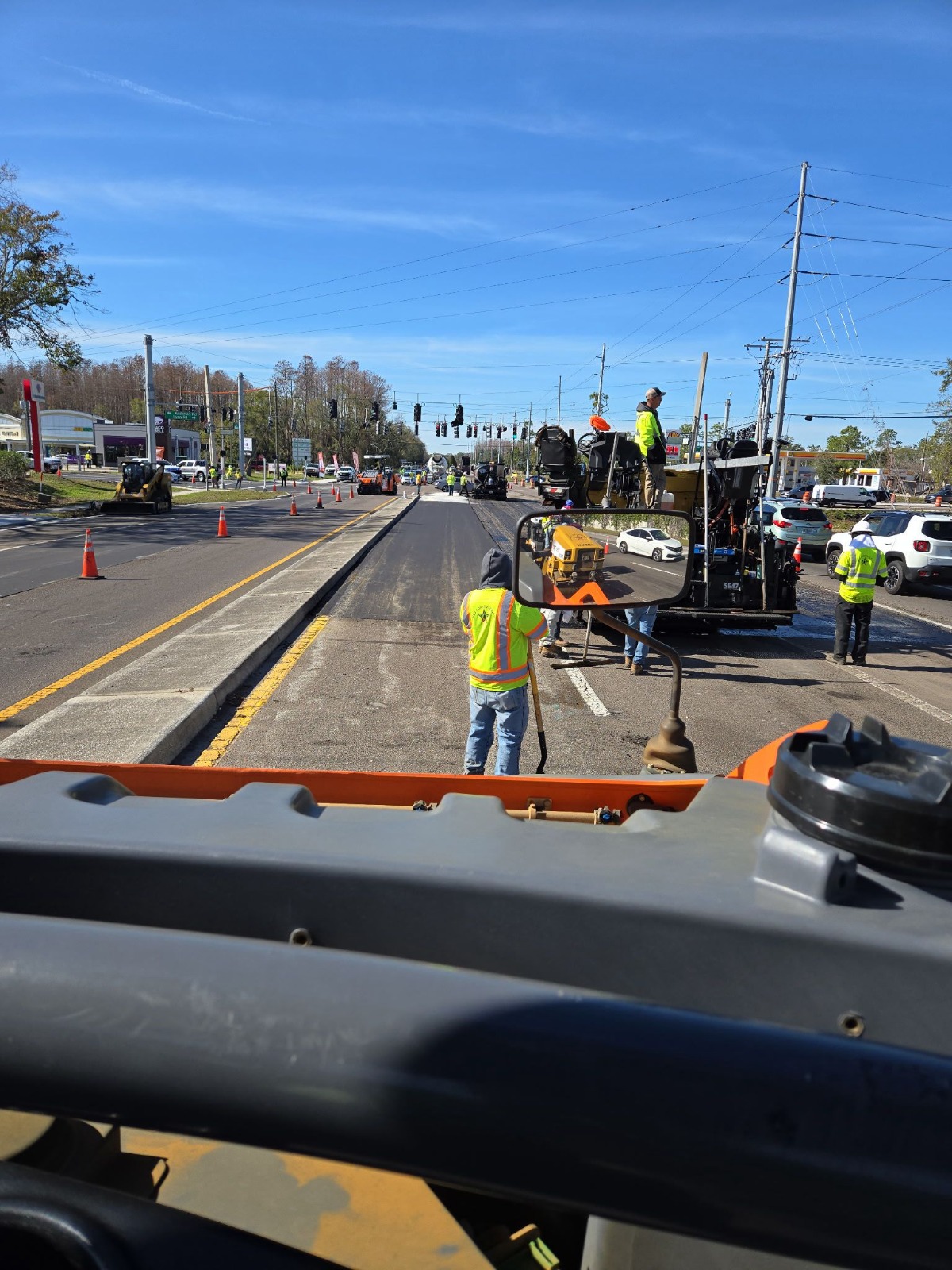
On milling work, the tightest coupling is between the machine and the trucks under it. A milling machine that runs out of trucks stops. A truck that waits for a machine burns a cycle. Getting this right is a scheduling problem with real money attached, and it is much easier when the same organisation is arranging both.
VLJ owns its milling equipment and employs the crews that run it. The hauling side is a network of more than one hundred tri-axle dump trucks operated by independent owner-operators, coordinated through our dispatch team. The advantage is not that one company owns everything — it is that the cut and the haul are planned as a single operation, with dispatch sizing the truck count to the production rate rather than to a fixed fleet.
Questions worth settling in October
If you have work planned between November and spring, these are worth answering now rather than in the field:
- What is your peak week? Not the average — the week where the schedule demands the most material moved.
- What is the cycle time from your site to the disposal or delivery point, at the time of day you will actually be running?
- Are your receiving sites' hours compatible with the shifts you plan to work?
- Where is the flex? If the season runs wet, which weeks absorb the slip?
A contractor who can answer those has a conversation with dispatch that produces a real commitment. One who cannot is asking for trucks in the abstract.
The value of being early
There is no trick to this. Capacity goes to the work that is planned, communicated and consistent. The contractors who never seem to struggle for trucks in February are not lucky — they had the conversation in October, and they have been a reliable customer for long enough that dispatch knows what their week looks like.
We work throughout Florida, with most of our work in FDOT Districts 1 and 7. If you are mapping out dry-season production and want to talk through the hauling side, get in touch.