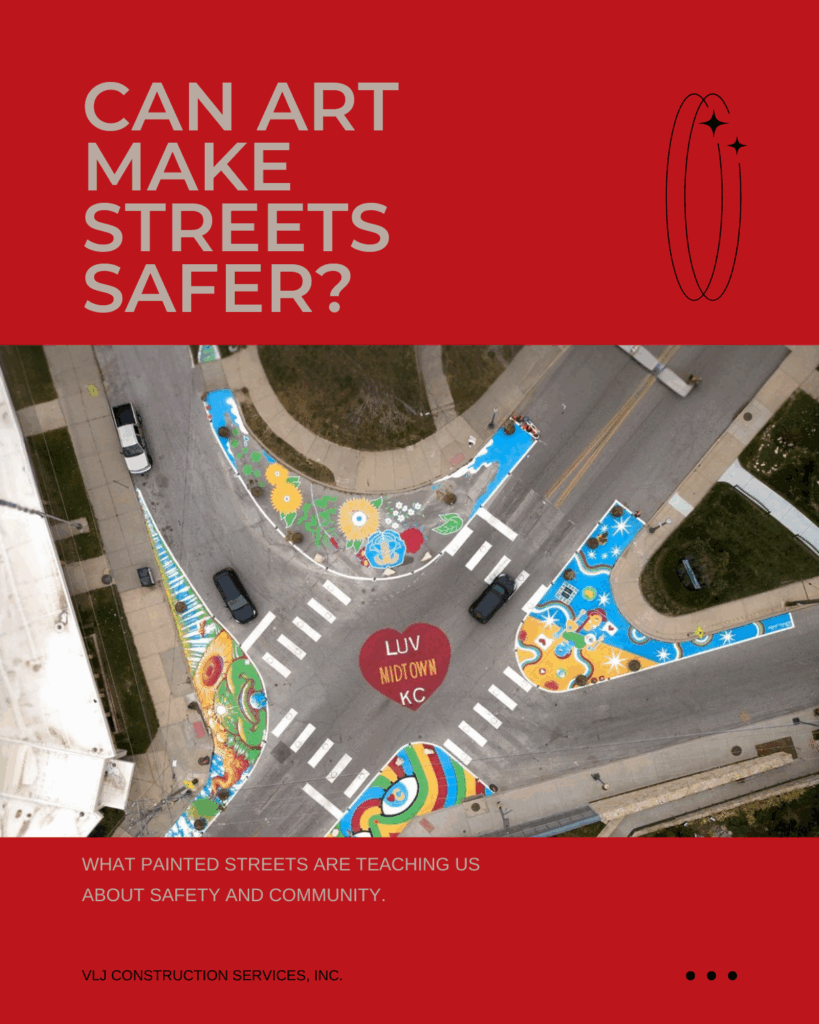
At intersections and crosswalks across cities we admire, asphalt has become a canvas. And not just for decoration.
It’s called asphalt art, a growing movement where communities use road surfaces to install vibrant murals, patterns, and public art. While it may seem like just paint, studies suggest the impact is far more than cosmetic.
Through the Bloomberg Philanthropies Asphalt Art Initiative, more than 60 cities have launched these projects. The results are compelling. One independent study found that in cities like Durham and Kansas City, crashes involving pedestrians or cyclists fell by nearly 50 percent after installations were added.
This makes sense. Asphalt art naturally draws the eye. Drivers slow down. Pedestrians become more visible. Roads feel shared, not just passed through. In areas where lines once faded into the background, painted intersections now stand out, demanding caution and presence.
But beyond the numbers, what struck us most was the role of the community. In Jackson, Mississippi, students and local artists helped design intersection art outside a neighborhood school. It wasn’t just about safety. It became a symbol of identity and local ownership.
In a state like Florida, where pedestrian fatalities remain among the highest in the nation according to Smart Growth America’s 2023 Dangerous by Design report, this kind of engagement might be part of the answer. Traditional engineering alone hasn’t solved it. So what happens when we invite people into the process of shaping their streets?
These projects aren’t simple murals. Materials must be slip-resistant. Designs must comply with visibility and maintenance standards. Cities need to plan installations thoughtfully, especially in high-traffic zones.
Still, the barriers to entry are surprisingly low. Compared to costly street redesigns, these projects can be quick to deploy, relatively inexpensive, and highly visible. In some cases, they even serve as test pilots for permanent infrastructure changes, creating a feedback loop painted right into the asphalt.
As contractors and community members, we find this shift inspiring. We haven’t installed one ourselves, but seeing this happen across the country raises a question: What if our streets could reflect not just traffic flow, but culture, pride, and collaboration?
Infrastructure isn’t just about roads. It’s about how we move, connect, and take care of each other. If a little color can slow a car, spark conversation, or make a child’s walk to school safer, that’s something worth paying attention to.
We’re watching this space closely. And we’re curious. What could Florida’s streets say if we let them speak?
Related Resources
- What Happens When Innovation Meets the Work Zone?
- Top 5 Breakthrough Benefits of Self-Healing Asphalt: A Smarter, Pothole-Free Future
- How a Boy Named Luis and a Highway Changed the Florida Keys Forever
Have a project in Florida? Get in touch with VLJ Construction Services.