Can roads repair themselves?
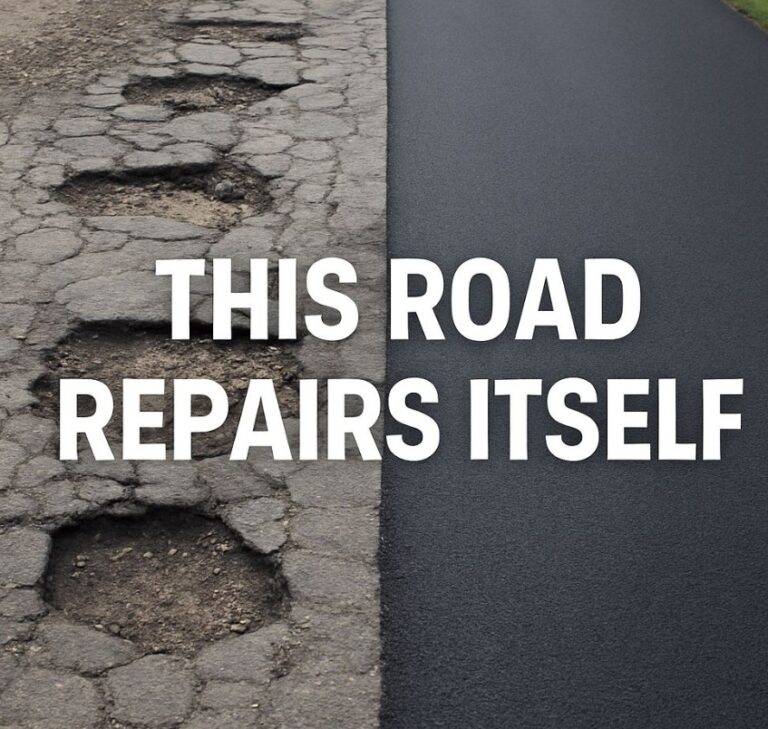
Thanks to breakthrough innovations in self-healing asphalt, the answer might soon be yes.
Researchers are exploring smart asphalt technology that could revolutionize road maintenance, reduce potholes, and significantly extend pavement lifespan. The goal is to save time, money, and resources while improving durability.
What Is Self-Healing Asphalt?
Self-healing asphalt is an advanced paving material engineered to fix itself before visible damage forms.
The technology works by embedding:
- Plant-based rejuvenators, or
- Steel fibers
…into the asphalt mix. When microcracks develop due to traffic or temperature changes, these embedded materials activate and release healing agents that restore the asphalt binder.
Think of it like skin for roads. Small wounds are sealed before they grow into bigger problems.
Top 5 Benefits of Self-Healing Asphalt
1. Fewer Potholes and Surface Failures
Microcracks are sealed automatically before they evolve into major damage.
2. Extended Pavement Life by 30 Percent or More
Early trials show significantly longer pavement lifespan, reducing the need for full resurfacing.
3. Reduced Maintenance and Repair Costs
Less frequent repairs mean big savings for municipalities and contractors.
4. Minimal Traffic Disruption
Fewer repairs and lane closures help reduce delays and improve road safety.
5. Smarter, More Sustainable Infrastructure
Longer-lasting asphalt means:
- Fewer raw materials are needed
- Less construction waste is generated
- Carbon emissions are reduced over time
Is the U.S. Using Self-Healing Asphalt?
While self-healing asphalt is not yet DOT-approved for widespread use, it is gaining momentum in the United States.
Current research is supported by:
- Federal Highway Administration (FHWA)
- University of Missouri
- MIT (Massachusetts Institute of Technology)
- NCAT (National Center for Asphalt Technology at Auburn University)
- State DOTs in California, Virginia, and Minnesota
These institutions are exploring feasibility, long-term performance, and cost-effectiveness.
Challenges to Widespread Adoption
Before self-healing asphalt becomes the industry standard, several challenges must be addressed:
- Performance in extreme climates
- Compatibility with current paving equipment
- Higher upfront costs compared to conventional asphalt
- Lack of standardized testing procedures
Ongoing pilot programs continue to provide promising data and increase trust in the technology.
Smart Asphalt Means Smarter Roads
Self-healing asphalt reflects a larger shift toward smart infrastructure that is built for longevity, efficiency, and sustainability.
The benefits include:
- Longer-lasting roads
- Fewer emergency repairs
- Safer driving conditions
- Better return on investment for infrastructure projects
Would You Try Self-Healing Asphalt in Your Next Project?
Asphalt paving is evolving. Self-healing asphalt could be the smart solution to long-term maintenance challenges.
Would you consider using innovative materials that reduce costs and extend pavement life?
Contact VLJ Construction
Learn more about advanced asphalt technologies for your next project.
- 📞 Call: 844-258-7825
- 📧 Email: quotes@vljconstruction.net
- 🌐 Visit: vljconstruction.net
Related Resources
- Edward de Smedt: The Unsung Pioneer Who Paved the Way for Modern Asphalt Roads
- What Happens When Innovation Meets the Work Zone?
- Can Art Make Streets Safer? What Florida Can Learn from the Asphalt Art Movement
Have a project in Florida? Get in touch with VLJ Construction Services.