Mid-August is the wrong time to be caught with an open lane and no plan. A milling operation is one of the easier jobs to secure ahead of weather, but only if the decision comes early enough to act on. Once a named system is inside the five-day cone, a general contractor needs to know what the milling scope looks like on the ground and who is moving what.
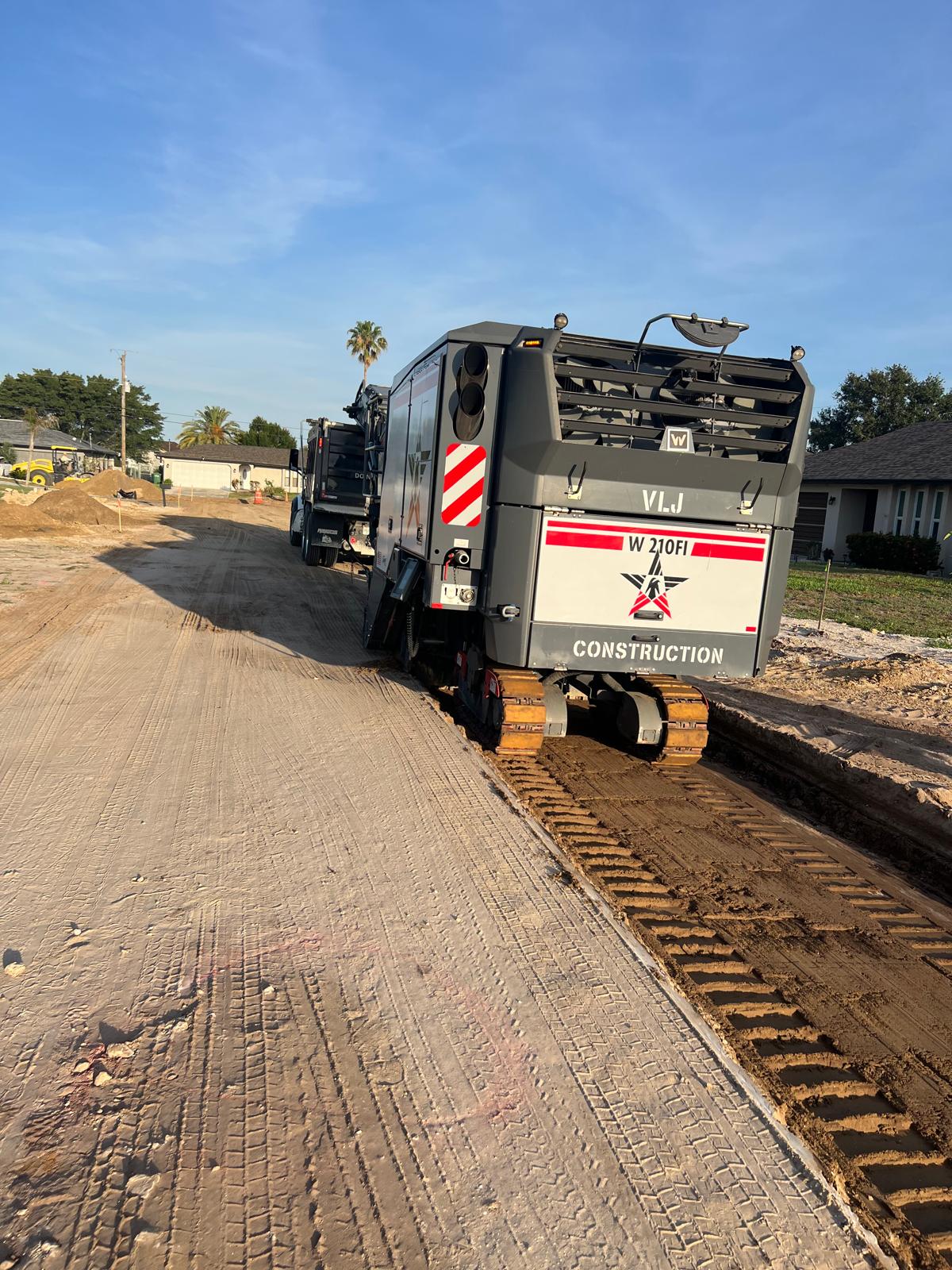
The milled surface is the first problem
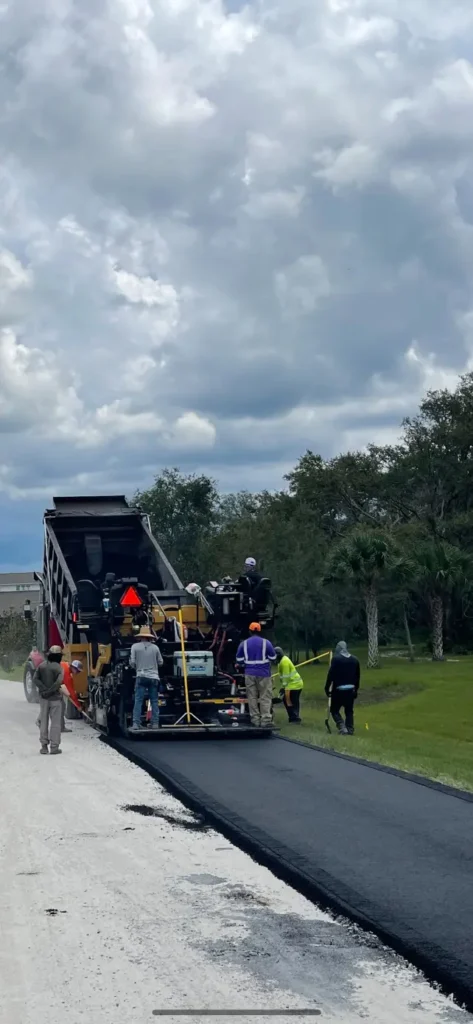
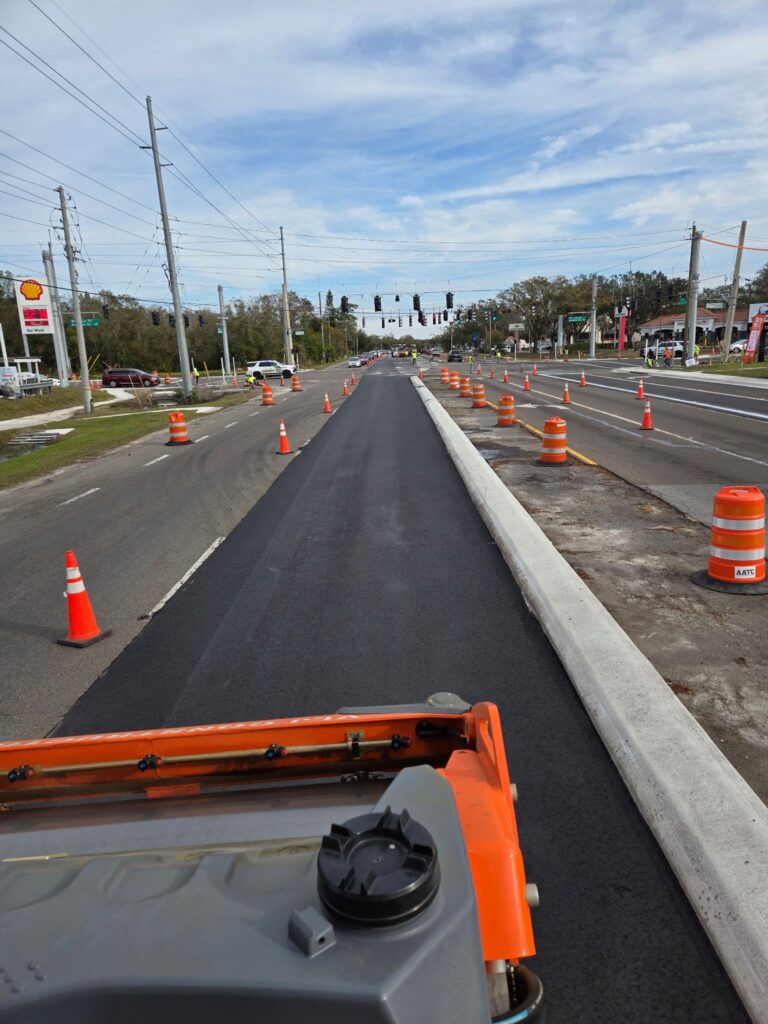
A milled surface is not a finished surface. The grooves left by the drum hold water, and the transition between milled and unmilled lanes creates a lip that traffic has to cross. Neither is a serious issue on a dry Tuesday. Both matter when a storm drops several inches of rain in a few hours and the road stays under traffic for a week before resurfacing.
The practical questions before a storm are simple ones:
- How much lane is currently open, and can it be brought to a uniform elevation before the weather arrives?
- Does water leaving the milled area have somewhere to go, or has the milling cut off the flow line the road relied on?
- Are the longitudinal joints and edge drops signed and protected for the traffic that will use them during the storm?
If the answer to the first question is "more than a shift's worth," the honest call is to stop opening new lane and finish what is already cut.
Millings do not belong on the site
Reclaimed asphalt pavement has value, which is exactly why it should not sit in a pile beside an active roadway during a wind event. Loose material migrates into inlets and gutters, and an inlet that clogs during a storm becomes a flooding complaint the contractor owns.
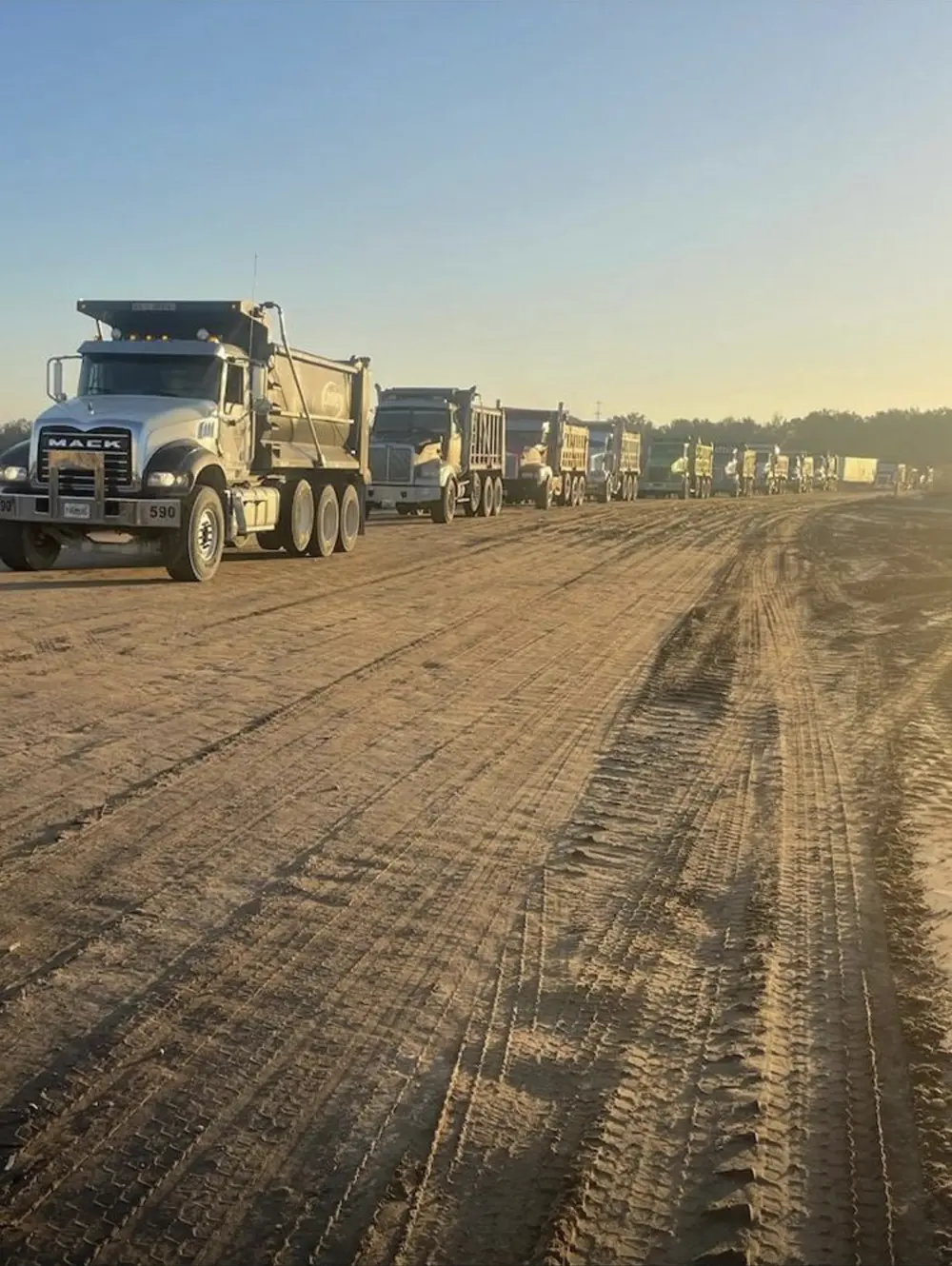
Hauling capacity is the constraint here, and it is worth arranging before the forecast tightens. VLJ coordinates a network of independent owner-operators running tri-axle dump trucks, and demand across that network climbs sharply in the days before a storm as every site in the region tries to clear at once. A contractor who calls dispatch on the third day of a five-day cone is competing with everyone else who waited.
Equipment, devices and the yard
Milling equipment is heavy and low, which makes it more storm-tolerant than most of what sits on a jobsite. It still needs to be somewhere sensible: off the travel way, out of the flood-prone low corner, and not under the one tree everyone drives past without looking at.
Maintenance of traffic devices are the opposite problem. Cones, drums, barricades and portable signs are light, and a work zone that was correctly signed on Friday can be scattered across three lanes by Sunday. Devices either come down and go into a trailer, or they get ballasted properly. The middle option — leaving them standing and hoping — is how a work zone turns into a hazard nobody is on site to fix.
Document the condition before you leave
Photograph the milled area, the transitions, the drainage and the device layout before the crew clears out. If the road takes damage during the storm, that record is the difference between a straightforward conversation about pre-existing condition and an argument.
This is unglamorous work, and it is a real cost in a compressed schedule. It is also considerably cheaper than remobilizing to repair a washed-out shoulder, and far cheaper than explaining to an owner why a milled lane flooded the property next to it.
Plan the restart, not just the shutdown
The crews that recover fastest are the ones that decided, before shutting down, what the first two days back would look like. Which lane reopens first, what has to be re-swept, whether the mill needs to reset grade, and how many trucks the schedule needs on day one. Storm preparation and storm recovery are the same conversation, held once.
If you have milling scheduled in Florida this season and want to talk through the sequencing, get in touch — it is a better conversation to have in August than in the middle of a cone.